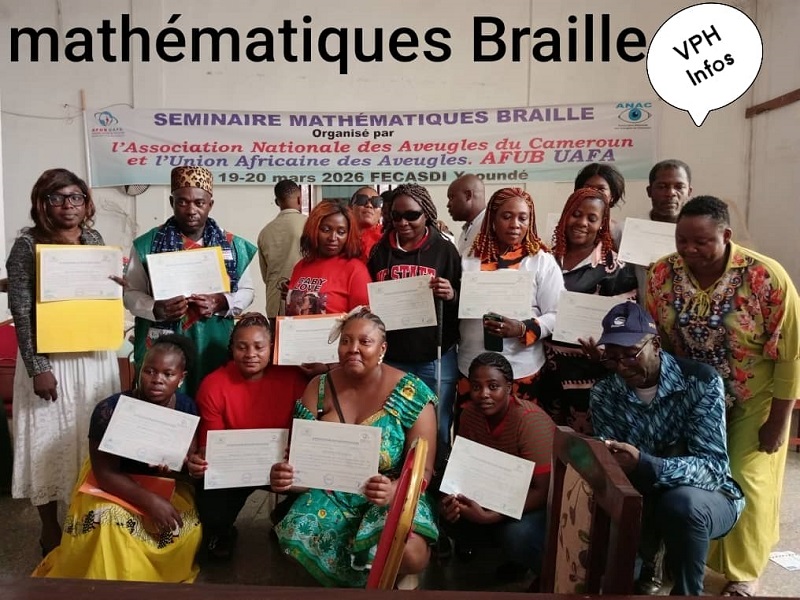
The Phase 1 induction seminar on Braille mathematical symbols, organized by the National Association of the Blind of Cameroon (ANAC), was held on March 19 and 20, 2026, at the conference hall of the Cameroonian Federation for the Intellectually Disabled (FECASDI) in Nkol-Eton. This initiative aimed to strengthen the pedagogical skills of specialized teachers to improve mathematics instruction for blind and visually impaired students.
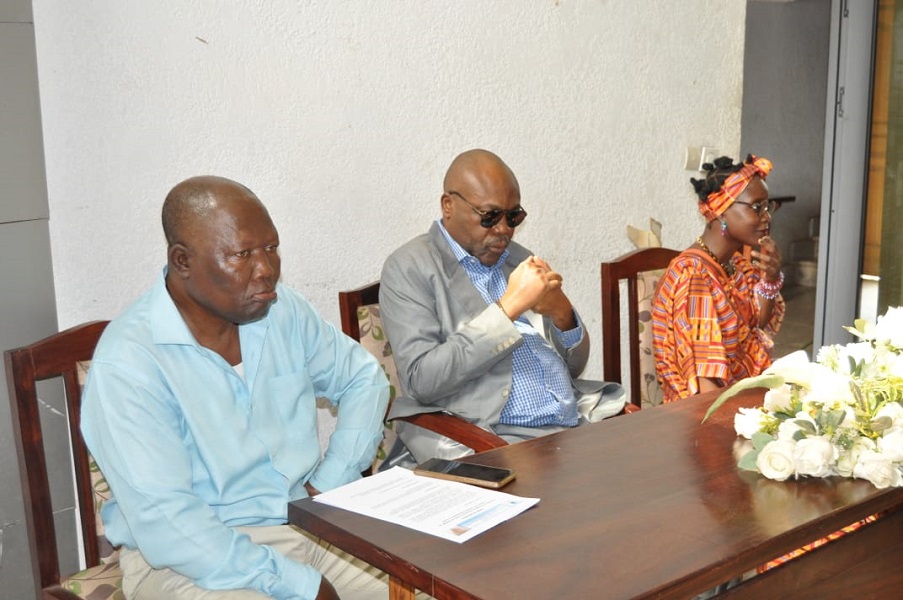
Enthusiasm and Participation
The seminar generated significant interest, with 32 people participating, which was 12 more than initially expected. Unfortunately, about ten applications had to be turned away due to limited space and logistical resources. This high level of enthusiasm reflects the willingness and commitment of teachers to improve their teaching practices to better support students with visual impairments.
Participants included individuals with various types of visual impairments, physical disabilities, and able-bodied individuals.
It should be noted that due to a lack of resources, we were unable to invite teachers from rural areas and regions outside the city of Yaoundé, which excluded those from other towns.
Quality of Modules and Practical Organization
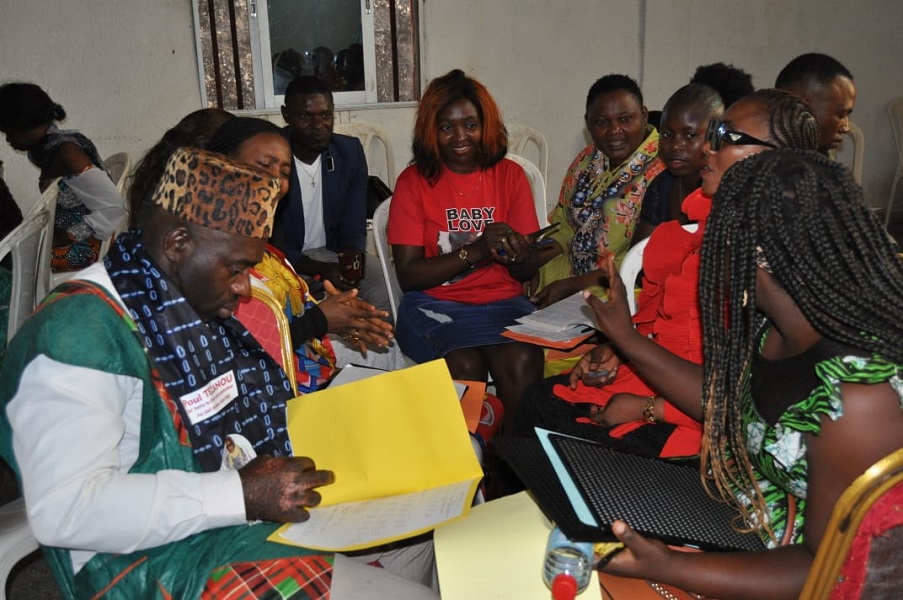
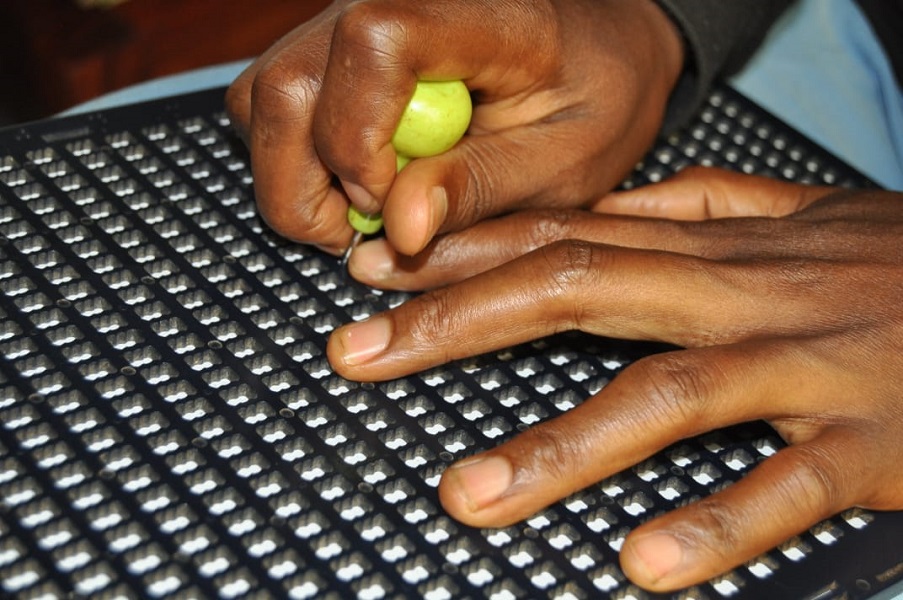
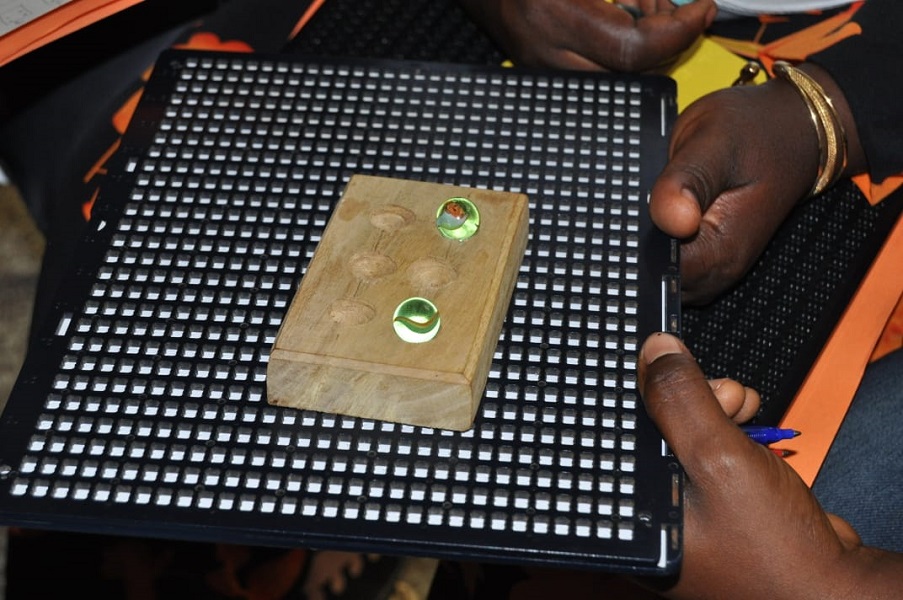
The modules offered were of high quality, covering both the theoretical and practical aspects of using Braille mathematical symbols. Participants appreciated the interactive and participatory methodology, which enabled a good understanding and practical application of the knowledge acquired, despite the relatively short duration. The practical organization was flawless, featuring adapted pedagogical materials and experienced trainers. Among the participants were male and female teachers with visual impairments, transcribers, physically disabled individuals, and able-bodied individuals.
Interest and Lessons Learned
The seminar aroused great interest among the participants, who appreciated the opportunity to build their skills and share their experiences. The lessons learned from this seminar are numerous:
- The importance of using Braille mathematical symbols for the inclusion of blind and visually impaired students in mathematics education.
- The need to train more teachers in the use of Braille mathematical symbols.
- The importance of collaboration among educational stakeholders to improve the inclusion of students with visual impairments.
Here are a few examples of mathematical symbols in Braille:
1. Numbers
- 0 : ⠼⠚
- 1 : ⠼⠁
- 2 : ⠼⠃
- 3 : ⠼⠉
- 4 : ⠼⠙
- 5 : ⠼⠑
- 6 : ⠼⠋
- 7 : ⠼⠛
- 8 : ⠼⠓
- 9 : ⠼⠊
2. Operators
- – : ⠠⠖
- – : ⠠⠤
- × : ⠠⠦
- ÷ : ⠠⠴
3. Relations
- = : ⠠⠶
- ≠ : ⠠⠾
- < : ⠠⠌
- > : ⠠⠐
4. Parentheses
- ( : ⠠⠣
- ) : ⠠⠜
Note: Braille symbols may vary slightly depending on the language and country. These examples are valid for French Braille.
A few examples of numbers and mathematical expressions in Braille:
- 123 : ⠼⠁⠃⠉
- 2 + 2 = 4 : ⠼⠃ ⠠⠖ ⠼⠃ ⠠⠶ ⠼⠙
- 5 × 3 = 15 : ⠼⠑ ⠠⠦ ⠼⠉ ⠠⠶ ⠼⠁⠑
It is important to note that mathematical Braille is a complex system that requires advanced training and extensive practice to be mastered. For this reason, we are seeking funding for Phases 2 and 3, which will include an increase in the number of participants.
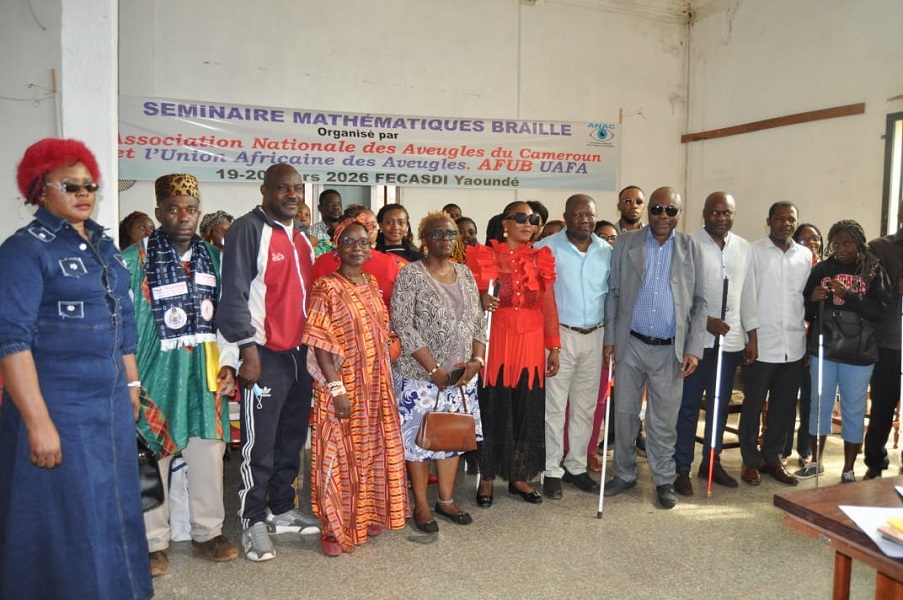
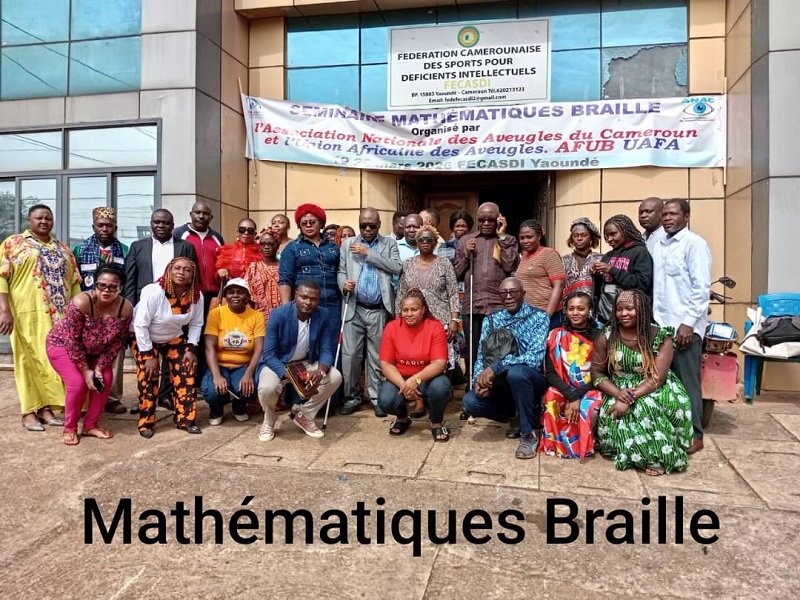
The Braille mathematical symbols induction seminar was a success, characterized by the active and committed participation of specialized teachers. The lessons learned from this seminar will serve as a foundation to improve mathematics instruction for blind and visually impaired students in Cameroon. It is recommended to organize further training sessions to meet the demand and improve the inclusion of students with visual impairments.
Etienne Didier ONANA, General Rapporteur.